There’s no ‘AI’ in PITCH
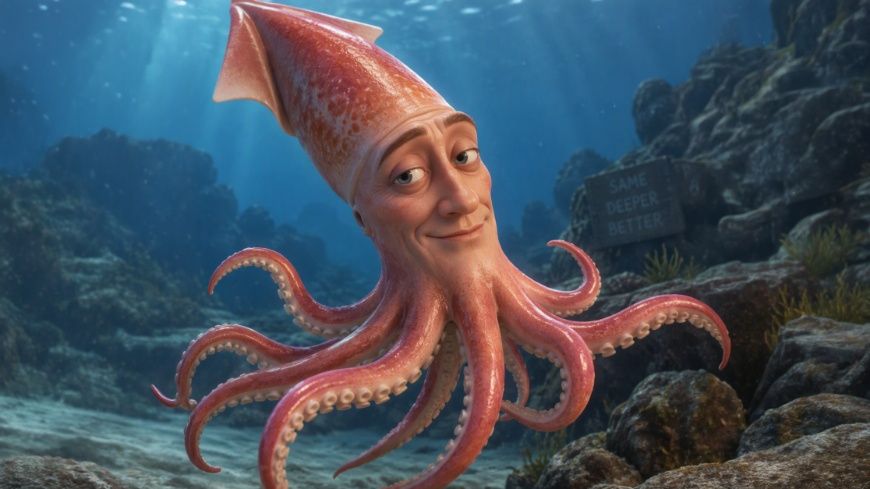
Above: An example AI-generated image similar to those featured in pitches received by the ACTF in recent months.
A hawk with a misplaced face.
A racoon with five limbs.
A squid with a human head.
Over the last few years, we’ve seen plenty of spruiking (sometimes presented as “keynotes”) by executives of generative AI platforms at screen industry forums and events, promising that while you once had to spend many hours developing concepts and creating pitch decks, with AI, you can now do it in a fraction of the time. Unfortunately, this year the ACTF has received an influx of AI-designed, edited and generated pitches. While AI enables anyone to construct a bible, applicants seeking development or production funding should be aware that overreliance on this tool carries several risks and usually results in generic concepts, presented with warped imagery, that are all too easy for us to spot and dismiss.
In a competitive market, where fewer children’s TV series and films are being commissioned, authenticity and distinctiveness are more important than ever.
The Concept
In a world saturated with content, coming up with a unique concept that will cut through the noise in the streaming and online space is no easy task. But using AI to brainstorm ideas can raise ethical concerns and potential IP ownership and copyright issues. Even just heavily editing your original ideas in an AI program could be problematic. It might make work grammatically correct, but it can also strip the writing of individuality and authenticity.
In AI-created pitch decks, character descriptions are often reduced to brief, generic dot points, offering little insight into their appeal to children. Many AI-designed bibles also detail a very similar ‘story formula’ for an episode, which we’re seeing repeatedly. Few provide examples of actual storylines that show how these characters interact and operate in their world, demonstrating the applicant’s storytelling ability.
The Imagery
Applicants using AI to illustrate a visual style in their pitch documents should be mindful that other applicants may be using the same tools. AI character design means everything is painted or tainted by the same AI brush. The characters we’re seeing in these pitch decks, whether 2D or 3D, human or animal, share uncanny similarities in their aesthetics, colours, faces, and silhouettes. Using AI imagery and design risks making concepts, no matter how unique, appear generic and machine-made, and they tend to be riddled with distorted images. AI-designed characters and worlds may also misrepresent the likely finished product, when their visual complexity cannot be achieved in the project’s proposed non-AI animation process.
An alternative, which was standard practice before AI, is to commission a human illustrator to sketch a small set of original character images and combine those with cited examples from similar pre-existing animated series. This approach would give the reader a clearer sense of the animated series’ proposed look and feel.
The Pitch Elements
AI may also be misleading applicants about what to include in their pitch to appeal to an investor or broadcaster at an early stage. The ACTF is seeing overly detailed pitch documents containing vast amounts of ‘information’, but limited insight into the actual concept. Many AI-designed pitch decks emphasise the IP’s expandable world, detailing ‘commercial flywheel and consumer products’ and the manufacture of plush toys (based on AI imagery) rather than showing the strength and appeal of the project itself.
Animated pilot storyboard pages featuring ‘indicative’ characters have appeared in multiple pitch decks and appear to be AI-generated. These pages do not present achievable visuals or showcase the project's strength. They just take up valuable real estate in the pitch deck and show that the applicant has used the same AI program to develop their project as many other applicants have.
The ACTF welcomes applications from creators of all experience levels, but we warn potential applicants about using AI as a shortcut to success. No amount of AI research, editing and generating can take the place of human creativity and passion. Researching the industry, finding out what is being commissioned by broadcasters, and working with an experienced producer are all steps you can take to help shape your project in the right way. Taking the time to write from the heart and collaborating with other creatives, such as animators, illustrators, and photographers, are key to presenting a truly unique pitch deck that stands out from the crowd.
The ACTF has a strict policy that only human beings can assess the applications we receive. Using AI to create a pitch deck might save you time. But our human assessors are yet to see a good one.