Takeaways from Tropfest Rough Cut: a filmmaker’s take
I made my first short film when I was 12 years old. Shot on my brother’s friend’s iPad and edited on iMovie, it was about a young girl in a dystopian world who is forced to enter a gladiator-esque battle for survival. In other words, it was a complete rip-off of The Hunger Games.
The Hunger Games 2 (Dir. Kaede Miyamura) will never see the light of day, but creating these short films helped me explore my identity, find my creative voice and ignite a passion for screen stories that I’m still chasing today.
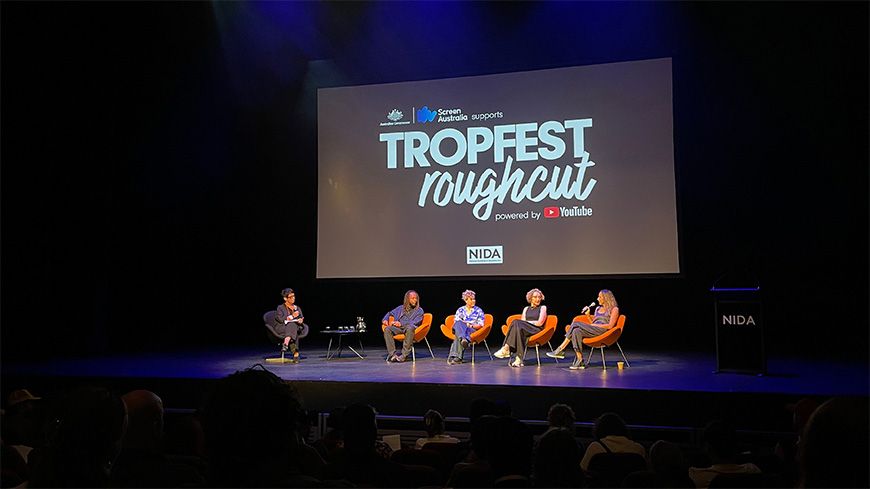
This sentiment was echoed among many of the attendees and panellists at Rough Cut, Tropfest’s two-day industry initiative for emerging filmmakers. I had the opportunity to attend the jam-packed event where I soaked up knowledge from industry legends, connected with peers, and left feeling inspired.
The throughline of the event was its focus on short filmmaking as an opportunity to explore and test creative voices, ideas and processes. While the industry feels impossible to break into now - production companies collapsing, long running shows being cancelled and a focus on commissioning premium content that leaves little room for emerging creatives to get a shot - it’s never been easier to make a short film. With new technology literally in our back pockets, many of the panellists encouraged emerging filmmakers to pick up a camera and start experimenting. While reflecting on his earlier films, cinematographer John Seale shared that he didn’t know what he was doing; he just went out there and made films. His career now spans over five decades.
In a panel discussion focusing on bridging the gap from short-form to long-form, Yolanda Ramke, writer/director of Cargo, which was adapted from her Tropfest finalist short, connected the experience of short filmmaking to a David Bowie quote:
“Always go a little further into the water than you feel you're capable of being in. Go a little bit out of your depth. And when you don't feel that your feet are quite touching the bottom, you're just about in the right place to do something exciting.”
It summarised the importance of short filmmaking. It’s more than an industry ‘calling card’; it’s a training ground where we can experiment boldly, fail safely and grow as storytellers.
As an emerging writer/director, I often only attend industry events directly linked to my interests. Rough Cut, however, brought together voices from across different departments, including a panel on production and costume design which ended up being one of my highlights.
Moderated by Neil Sharma (Heartbreak High), Gypsy Taylor (The Newsreader), Fiona Donovan (The Correspondent) and Nicholas Dare (Together) talked through their processes – from breaking down a script to how they work with their team. In a room mostly filled with writers and directors, many questions centred around how directors can best support production and costume designers on self-funded projects with limited resources. It was enlightening to hear their pet peeves (don’t provide production designers with a shopping list!) as well as tips on how to stretch the budget to make sure every cent appears on screen.
With the current digital landscape, AI was inevitably a topic of conversation. Some panels touched on this briefly, emphasising that AI should be a tool for creative people, while others focused more explicitly by sharing case studies of content completely made of AI. It was somewhat reassuring to see that the majority of the attendees immediately knew which clips were AI-generated. In my opinion, the examples presented lacked humanity, a clear sense of voice and any real emotional resonance – completely at odds with the qualities both panellists and attendees identified as essential elements to good storytelling over the two-day event.
The weekend wrapped up with Tropfest, where John Polson (Founder and Director of Tropfest) alongside Charlotte McLaverty (2019 Trop Jr finalist) announced the return of Trop Jr, Australia’s largest film festival for kids. Powered by the Australian Children’s Television Foundation (ACTF), Trop Jr invites the next generation of filmmakers to imagine, experiment and tell stories that matter.
I had the opportunity to work with ACTF Education Manager Bridget Hanna to create a Trop Jr Education Resource that supports teachers, students and young storytellers on their filmmaking journey. It’s the type of resource 12-year-old Kaede would have loved to have had access to, featuring filmmaking tips, industry insights and masterclass interviews with past Trop Jr finalists. Writing the resource felt like a full‑circle moment, and I hope it not only guides young storytellers to create wonderful films but also helps them discover the same joy and love for filmmaking that I found at 12.
Tropfest, Rough Cut and the announcement of Trop Jr served as a wonderful opportunity to reflect on where I started, how far I've come and my hopes for the future. Being in a room full of peers who care just as deeply about short filmmaking was inspiring, and it captured what screen stories do best – they bring people together and spark conversations in a world that feels increasingly divided.
Trop 2026 reminded me that even though it’s hard and scary trying to enter an industry on the brink of change, I hope to never lose the passion, urgency and curiosity that 12-year-old Kaede had while making backyard rip-offs of The Hunger Games.
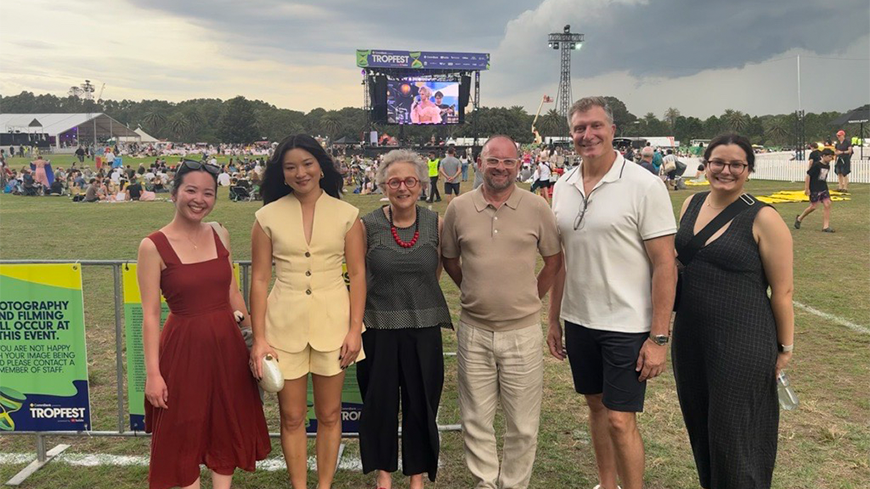
L-R: Emerging filmmaker and ACTF Digital Creator Kaede Miyamura, ACTF Board member Michelle Lim Davidson, ACTF CEO Jenny Buckland, ACTF Board member Paul Wood, ACTF Board member Simon Pryce and ACTF Education Manager Bridget Hanna.