Making space for wonder: using Moonfish with Year 7s in the library
There is something special that happens when students are invited into a story that does not rush to explain itself. So much of school can ask young people to arrive quickly at certainty: identify the theme, explain the symbolism, locate the correct answer. But I have seen some of the richest learning happening when a text resists that impulse and instead asks students to sit inside ambiguity, emotion and possibility.
That is what makes the Australian Children’s Television Foundation’s Tales from Outer Suburbia education resource such a gift for middle grade classrooms and library spaces. Inspired by Shaun Tan’s extraordinary storytelling worlds, the resource - centred around the new television series - gives teachers flexible, curriculum-aligned ways to explore visual storytelling, critical thinking, creativity and emotional literacy.
One of the greatest strengths of this series is its openness. Each episode of the show stands alone, allowing teachers and librarians to use it as a single text study, a creative writing provocation, a media analysis lesson or a springboard for rich discussion. The suggested activities available online are carefully scaffolded without being restrictive, leaving space for students’ own interpretations and imaginative responses.
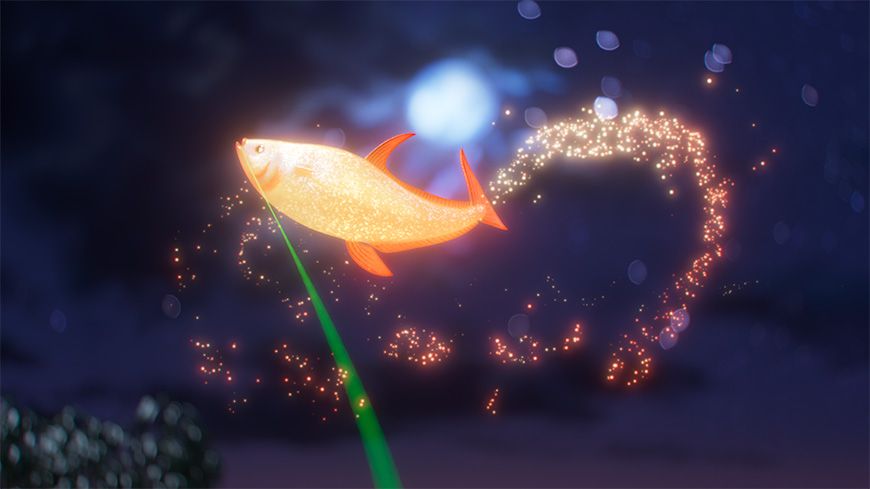
Episode 7, Moonfish, would be especially powerful for Year 7 students. In this episode, Klara and Pim are grappling with the absence of their father and the grief that shadows their family. Through the strange and luminous image of moon fishing in the night sky, the episode explores loss and the quiet ways grandparents can help children make sense of emotions that feel too big for words. The accompanying activities invite students to think about “story spaces”, screen language, the communication of emotion, and the transformation from page to screen.
Recently, I used Moonfish with a small group of Year 7 students during a lunchtime session in the library. This quiet, voluntary learning space included a small group of curious students, lunchboxes on the table, chairs pulled into a loose circle, and the freedom to think together. The lunchtime setting amplified the strengths of the resource.
Because students had chosen to be there, they entered the story generously. There was less pressure to get it right, and more willingness to sit with questions.
We began by watching the episode together. The students were immediately struck by its mood: the darkness of the night sky, the surreal beauty of the moonfish, and the almost dreamlike quiet of the Night Chef sequence. One student commented that it felt “sad but comforting at the same time,” which opened a wonderful conversation about how stories can hold multiple feelings at once. From there, we moved into the first activity, which asks students to think about Shaun Tan’s idea of “empty space” in storytelling – those purposeful gaps that invite the audience to become co-creators of meaning. This was where the Year 7s really came alive. They began posing questions the episode had left behind. Why did the moonfish need to be caught? Was it real, or symbolic? Who exactly was the Night Chef? Why does grief in this world become something you can almost physically hold?
What I loved most was that the activity validated their uncertainty. Instead of pushing them toward neat answers, it positioned their wondering as the work of interpretation itself. For students this age, that is incredibly empowering. Year 7 can be such an important moment in the development of reader confidence. Many students arrive at secondary school believing that English is about decoding what adults already know. These activities disrupt that belief. They tell students that their questions matter, that meaning is collaborative, and that stories are places they help build.
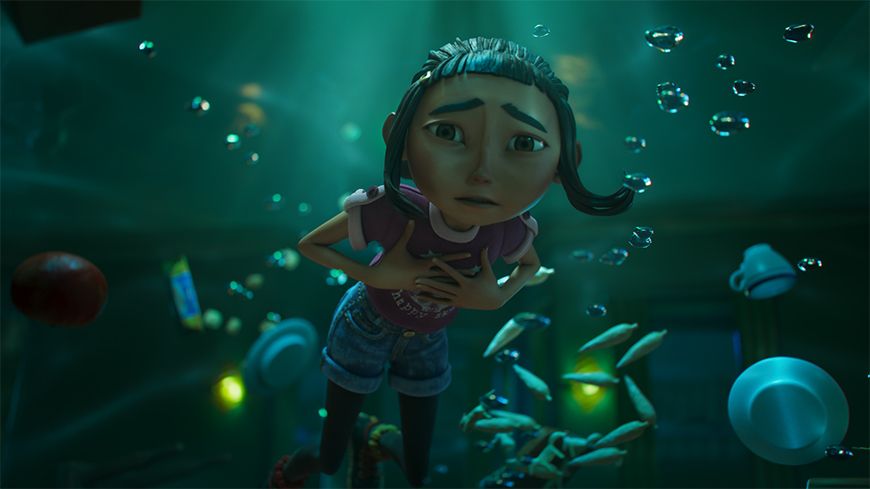
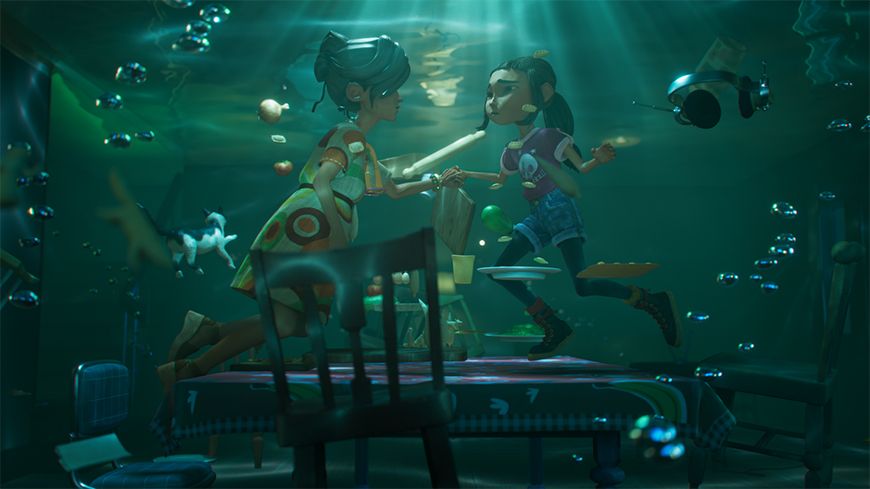
The next activity we explored focused on communicating emotion. Students traced how Klara and Pim’s grief is expressed visually through flooding rooms, silence, drawings, flickering film and the strange weight of the moonfish. This was an especially rich entry point for students who may not always feel confident speaking directly about emotions. By discussing how feelings are externalised through image, sound and atmosphere, the students were able to talk about overwhelm, sadness and uncertainty at a useful distance. One student observed that Klara’s flooding living room made sense because “sometimes feelings make everything else harder to see.” It was such a thoughtful articulation of metaphor and emotional literacy in one sentence.
The library, again, felt like the perfect setting for this kind of work. Libraries are often where students come not only to read, but to think, to reflect, and to connect ideas to their own lives in quieter ways. Using Moonfish in a small lunchtime group reminded me how valuable story can be as both a literacy tool and a wellbeing tool.
From a teaching perspective, the resource is highly usable. The activities move beautifully between reflect, explore and create, which makes differentiation feel natural. Students can respond through discussion, visual annotation, drawing, short writing, storyboarding or creative response. That flexibility means it works equally well in English, Media, Visual Arts, library programming or cross-curricular inquiry.
For Year 7 teachers, I can also see enormous value in pairing the Moonfish episode with Shaun Tan’s original Tales from the Inner City story as part of adaptation study. The page to screen section provides a strong framework for comparing visual choices, symbolism and emotional effect across forms.
But perhaps the greatest benefit of the series and its accompanying resources is that they trust young people. They assume students are capable of complexity. They invite them into ambiguity rather than pushing them away from it. They value imagination, interpretation and emotional nuance. Watching a small group of Year 7s in the library lean into those spaces, asking brilliant questions and offering deeply felt interpretations, reminded me why discussions and activities like this matter. Sometimes the most powerful learning begins not with certainty, but with wonder. And Moonfish leaves exactly the right kind of space for that wonder to grow.